Tuesday, December 23, 2008

Santa's New Ride


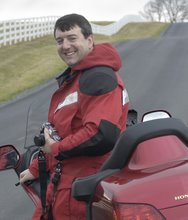
My shop, Open Road Outfitters, builds Harley and Gold Wing trikes. This is a sample of our latest work, the Santa Trike. The custom motorcycle paint was done by Webster Designs in Ruckersville, Virginia. I can't wait to get a chance to ride it, but am told I'll have to put on a Santa suit. No problem!

Saturday, December 20, 2008

New Motorcycle Trailering Website

A couple years ago I put together a website about motorcycle trailering called Tailpullers. It was fun to create, but hard to maintain because I wrote the code. There are so many great off-the-shelf content management systems now, I decided the site needed a re-write.

The new site is called Motorcycle Trailer Guide and is located at www.mctrailerguide.com. It contains over fifty articles on all aspects of motorcycle trailering and includes a discussion forum and photo gallery. I look forward to building it out -- it's a whole lot easier with someone else's tools!

Come on over and join the fun!

Monday, June 16, 2008

Truth in Advertising: Highland Scenic Highway


I'm fascinated by Adobe Photoshop's panoramic scene stitching software. This image was taken along WV 150, the Highland Scenic Highway, about ten miles from Marlington, WV. Click on the image to see a larger version.

Wednesday, June 11, 2008

Spotted in a field on an evening ride. She's seen better days, but there's still a certain charm in her curves.

Saturday, June 7, 2008

Swivel Hitch Installation Video

Motorcycle cargo trailers have a unique relationship with the bikes that tow them because the ball-and-coupler connection between the two moves in multiple dimensions as the motorcycle leans through a turn.

Some riders feel there is sufficient range of motion in the existing coupling to accommodate their riding style while other riders feel a swivel is essential. Then too, there are occasions when the motorcycle's lean can exceed the range of the joint and twist the trailer tongue. Hopefully this will only happen at low speeds, e.g. a tip-over in the parking lot or dropping the bike in a tight U-turn; I've done the former and heard from someone who has done the latter. In either case, it's possible the bike might lean too far, twisting the tongue.

Here's a little five-minute video I put together that demonstrates how a swivel is installed on a cargo trailer.


Click this link to order a swivel hitch for your motorcycle trailer.

Wednesday, June 4, 2008

Motorcycle Touring Do's and Don'ts

I had the chance recently to take my first extended ride of the '08 season and it reminded me of some lessons about motorcycle travel I've learned (and relearned) over the years. Funny, even though I write often on this topic, I still find myself, usually somewhere along the road, thinking "I should have known [insert travel pearl of wisdom here]." Here are a few things that re-occurred to me over the weekend.

DO bring backup maps and DON'T rely exclusively on a GPS. Three hours into my four-day trip, the GPS quit (that's strike two, Garmin) and I found I'd neglected to pack my DeLorme Gazetteer. It wasn't a deal killer for this trip, but had I been venturing into unfamiliar territory, it would have been a problem. I did at least have Street Atlas on my laptop, so I could browse routes each night and make notes.

DO choose boxers over briefs. I've found over the years that brief-style undershorts contribute to short rides because the elastic bands around the legs begin to chafe in delicate areas. Boxers or better yet, bicycle pants, are more comfortable over the long haul. Bike pants in particular are well padded in critical areas and significantly increase comfort on sport-oriented bikes with a forward-cant seating position that keeps you balancing on your nethers.

DO at least one shakedown run of any new gear before your "big" trip. I can't emphasize this enough. Week after week I get frantic calls from folks here at the shop, looking to bolt a trailer onto their bike and, oh by the way, they're leaving in a couple of days. Whether its a GPS, new tires, or anything else new to you, you will enjoy your trip a lot more if you add those gadgets and become accustomed to their operation well before your trip. This is especially true with any new riding gear. If you are planning to buy a new helmet or boots, purchase these at least a couple months in advance and wear them as much as possible to ensure they're well broken in. It's no fun to discover that your new helmet doesn't fit well or your boots pinch when you're at the end of day one on a ten-day trip.

DO have aspirin or ibuprofen handy. Take the recommended dose in the morning before you start riding and this will help ease muscle fatigue during the day.

Believe it or not, you'll feel fresher at the end of the day if you DO use earplugs on your ride. You may not pay attention to wind noise, but your brain is still processing it. Earplugs are especially good at filtering out white noise, while still allowing you to hear your bike and important sounds like sirens. In fact, I can hear sirens from a greater distance while riding WITH earplugs because the extraneous sounds around me are filtered out. When you hop off the bike and pop out the plugs after a long ride, you will be able to detect a noticeable difference in the sharpness of your hearing.

If you think you will need a tire change on your trip, DO coordinate that in advance, especially if you are choosy about your tires. Based on your tire's estimate remaining life (be conservative), figure out about where that will fall on your trip and contact a dealer in that area to reserve a set of tires. If your tires are within 1,000 miles of the end of their service life, replace them before your trip. When I returned home, my rear tire was shot. If I'd been on a longer trip, that could have cost me a day or two waiting on replacements that might not have been my preferred tire.

And finally, DO stay hydrated. Throughout your ride, that wind in your hair is taking moisture along with it. If you start feeling draggy, fatigued, or begin developing a headache, you own machine may just be low on water.

I hope you enjoy a safe and exciting riding season!

Sunday, April 20, 2008

The Road and The Ride

Some people are attracted to motorcycling for the thrill of the ride, the speed, the lean. Hitting the apex. Others are drawn to motorcycling for the camradarie enjoyed by a group of riders, or, just the opposite--the solitude of the lone rider. Still others are intrigued and inspired by the machine and its innerworkings. Over the years, I've come to enjoy these aspects of riding, but the original draw for me was, and continues to be, something else.

How could you hope to enjoy the American Experience, how could you expect to discover the unique, vast, mythic, iconic Open Road on anything other than a motorcycle? You can't. Just as we have mythologized and romanticized the American West with the cowboy and his horse, we've done the same with our motorcycles and the people who ride them. You can only find The Road on A Bike. (You may recognize this concept -- it's the strategy Harley has pursued for the last twenty years. I still remember one of Harley's print ads from years back "Ride Hard or Stay Home.") Hey, I'm a believer.

Of course there are roads and then there are Roads, just as there are rides and Rides, bikes and Bikes. After years of riding, I realized I'd become all too familiar with "little r" roads. I'm talking about interstate highways, expressways, the roads we often succumb to following when time must be converted to distance most efficiently. The problem is, riding the interstate too often becomes a crutch, a habit. An excuse. "Oh, well, I've just got to get to Asheville in six hours, so I'll have to take the Interstate." An Interstate will get you between points most efficiently, but it's not a fulfilling experience. Sort of like going to Sunday School and skipping church.

In the last year couple of years, I've made a special point to plan trips following more Roads and fewer roads. On average, I can travel between points in the Appalachians on non-express US highways and state primary routes, tacking on no more than 25% to my travel time; the greatest portion of that time being added when I ride through small towns instead of around them. Once in a while, the time is even shorter.

I came to this change of mind a few years ago on a return trip from the Roanoke Valley region, following the superslab. The GPS had my arrival home pegged at about 4:30 in the afternoon. As my mind wandered from one thing to the next, I started asking myself what I'd do with the rest of the day. Really, what would an hour's difference in my return mean? Nothing. I formed a plan to dump the Interstate and jump on US 211, a much more interesting ride. How much time could that really add? With the GPS on board, I could easily find the answer.

I wheeled the bike off the slab at New Market, quickly realizing the first benefit of the new route: Pack's Frozen Custard stand. +1 for The Road. Heading east on US 211 I found myself largely alone and riding in clean air, a welcome contrast to dodging the wind blast of one truck after another. 211 is a far more scenic and entertaining route with a couple short sections of switchbacks crossing Massanutten and the Blue Ridge. Instead of riding mindlessly, I was fully engaged in the ride. In fact, for a half-hour since diverting, I hadn't paid much attention to the GPS, knowing it would be recalculating routes for a while until its intentions matched mine. So when I looked down and noted my newly estimated arrival time, I was a bit surprised. 4:50 p.m. A paltry twenty minutes was the total cost between slogging along the Interstate and enjoying a memorable ride along The Road.

Since then I've replaced most of my interstate journeys with alternate routes and it's had an interesting effect on my perspective in more than just the added travel time, extra curves, and better scenery. To travel the old US highways regularly and exclusively is to rediscover what it felt like to travel cross-country years ago. You don't just point your bike in a direction and ride for hundreds of miles without interruption. Riding on old roads requires thought and some navigational skill. The general store is no longer just a curiousity you pass by; it regains its status as an essential rest stop. Original and one-of-a-kind eateries replace the endless string of derivative pretenders like Applebees and Cracker Barrel.

There's an entirely different feel to travel when I sit in a restaurant surrounded by community members instead of a herd of fellow travelers, all in a similar rush to eat and get back on the road. Instead of detachment, I feel connected. My waitress expresses surprise when she asks where I've come from and where I'm headed. A local rider offers a few new route ideas, giving the impression that if asked he or she would gladly escort me. No one's in a hurry, so I tend to linger a bit longer and relax.

Before it meant getting to your destination as fast as possible, this is what travel used to be about, connecting with people outside your usual circle. Making discoveries along the way rather than counting miles. Stopping at a wayside for lunch instead of another value meal. Dropping a few coins at Dinosaurland or The Mystery Spot, not an in-room movie. Sticking around long enough for a slice of homemade pie with a fresh cuppa Joe. Stopping for the night in a town where everything's closed at 8:00 p.m. Kicking tires and trading stories at the filling station instead of paying at the pump.

This type of travel isn't faster, but it's far more satisfying. And, as I have come to realize, if you're not on The Road, you're not enjoying The Ride.